
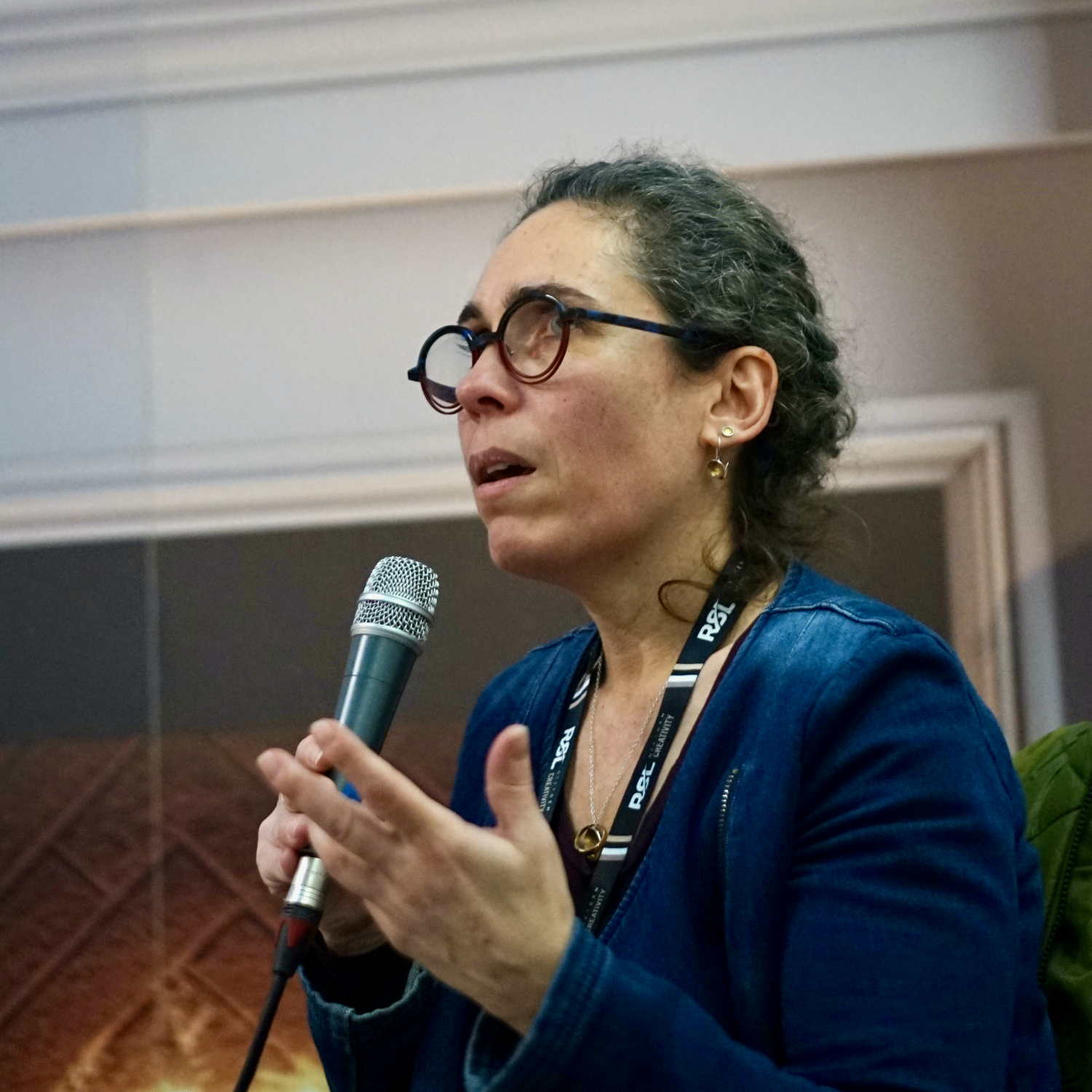
At this year’s Music & Drama Education Expo (MDEE), Music Teacher Magazine Editor Phil Croydon sat down with Mary-Alice Stack, Chief Executive of Creative United, for a wide-ranging conversation about inclusive music making, adaptive instrument design, and the rapidly evolving landscape of accessibility in music education.
Creative United, founded in 2013 as a spin‑out from Arts Council England (ACE), has grown into a national leader in making creative participation more accessible. Based at Somerset House but operating UK‑wide, the organisation works across visual arts and music to reduce the structural and economic barriers that prevent people from engaging fully with their artistic interests.
“I originally joined ACE to develop a scheme for the visual arts called Own Art”, Stack explained, “and later the Head of Music, Hilary Boulding, asked whether we could create something similar for the music sector. That became the Take it away scheme, which we’re still running 20 years later – now under Creative United”
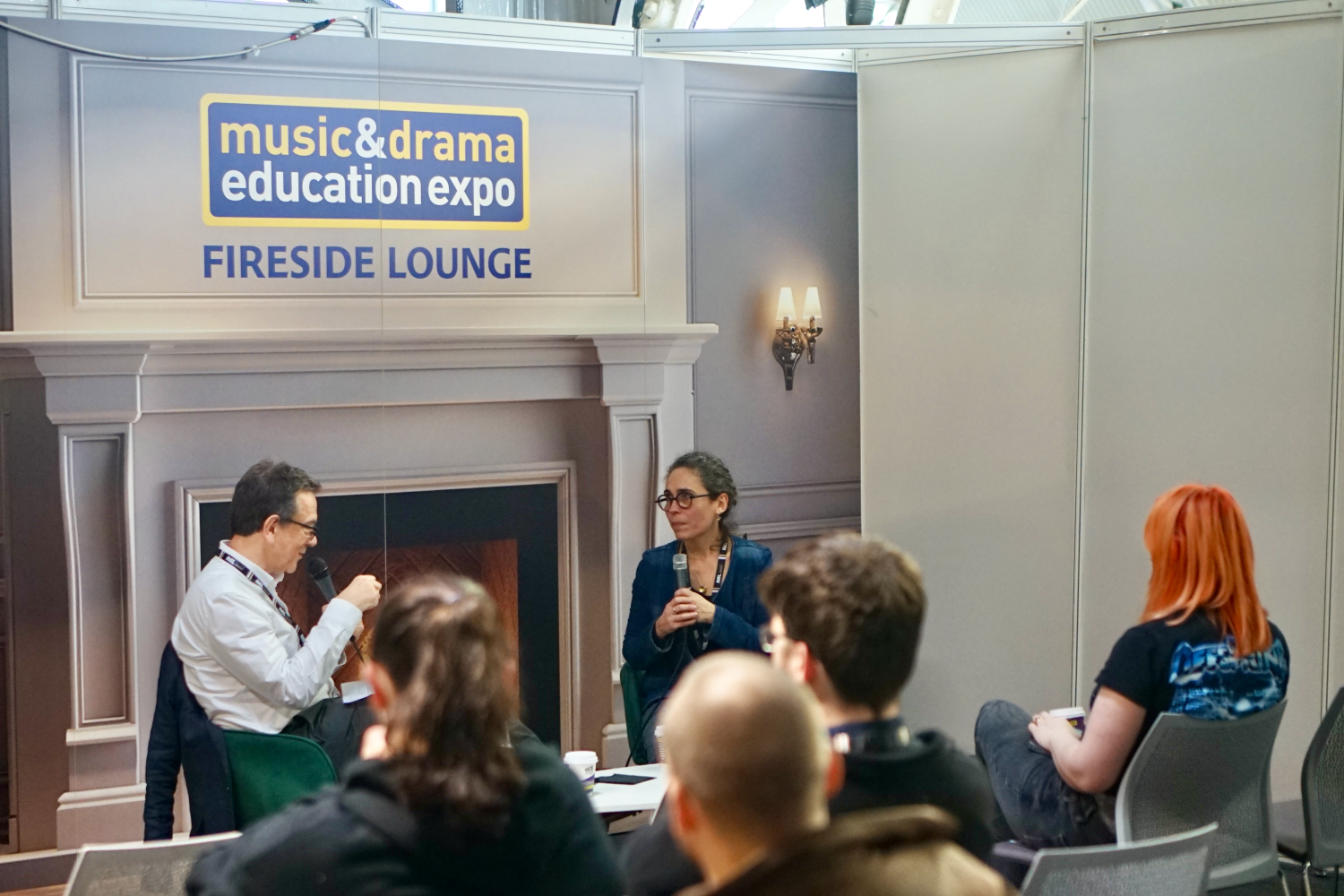
Image: Phil Croydon (left) and Mary-Alice Stack (right) during their fireside chat at MDEE 2026
“We started by focusing on the financial barriers to buying an instrument,” Stack continued, “a low‑quality instrument can end your musical journey before it begins, and many families can’t afford £200, £500 or £5,000 for a suitable instrument. Then over time we realised we also needed to address the design barriers that make many traditional instruments inaccessible to disabled players”.
This shift has placed Creative United at the centre of a major movement – rethinking the assumptions embedded in instrument design, from hand positioning to balance, dexterity, breath control and posture. “Classical orchestral instruments were built with a particular type of body in mind,” Stack said. “But the music world is full of people whose capabilities vary. We need to design with that reality in mind.”
Whole‑Class Teaching and Adapted Instruments
The rise of whole‑class instrumental teaching has intensified the spotlight on accessibility. Creative United’s fieldwork with the One‑Handed Musical Instrument Trust (OHMI) revealed that in some classes, up to half of pupils had an additional need affecting their ability to use a traditional instrument.
Adaptations – ranging from assistive technology to low‑cost mechanical supports – are already available, but teachers often lack the information to find them. “Sometimes the answer is a highly engineered custom solution,” Stack noted, “other times it’s a five‑pound bow‑holder made of elastic. What matters is identifying the specific barrier and responding creatively.”
A recurring theme is teacher confidence. “When teachers realise that they have permission and the capability to explore alternative methods, their entire approach expands,” she said. “They’re already skilled; they just need the knowledge base.”
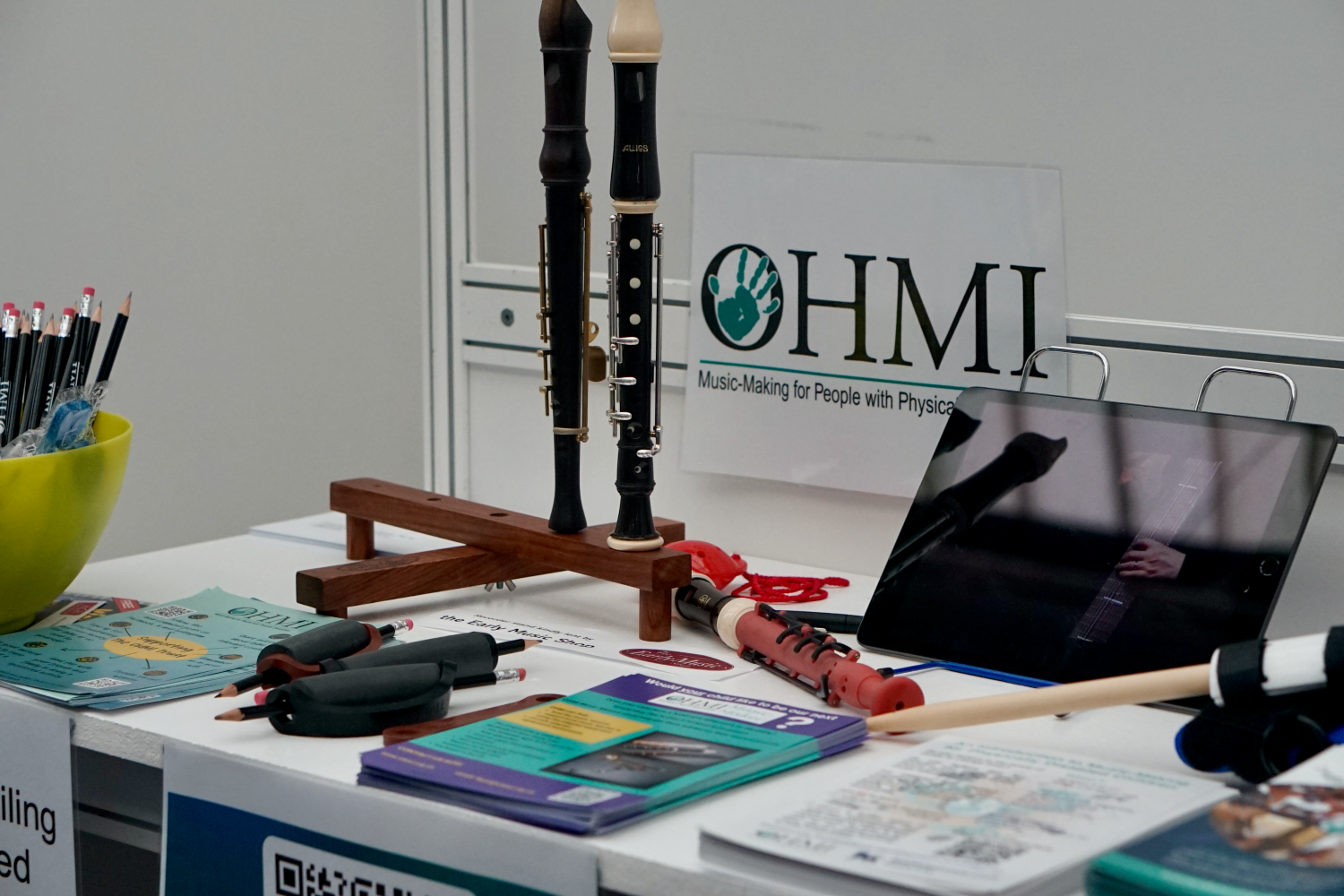
Image: OHMI’s stand at MDEE 2026
Why Publish the Guide to Adaptive Musical Instruments?
“We’re starting to see why the guide was needed”, Croydon expressed, “especially considering the National Plan for Music Education and its focus on inclusion. But why now?” he asked Stack.
“This is the second edition of the guide”, replied Stack, “the first came out in 2020 under the Take it away brand. Since then, we formalised the Inclusive Music Consortium, bringing together Open Up Music, Youth Music, Drake Music, OHMI, TiME (Technology in Music Education) and others like Sound Without Sight. The new edition was commissioned and published by Creative United on behalf of the consortium, with content developed by TiME.”
New music technologies emerge every month, making an up‑to‑date resource essential. The latest edition contains 80–90 products, spanning digital tools, modified brass and woodwind, ergonomic accessories, and prototypes still in the testing phase. Since its release in November, it has already seen more than 500 downloads, signalling strong demand from teachers, parents and musicians.
“The guide is not the end of the journey,” Stack emphasised. “It’s the beginning. We expect users to take the next step—to contact a maker, a supplier, a hub. The guide helps them know what questions to ask.”
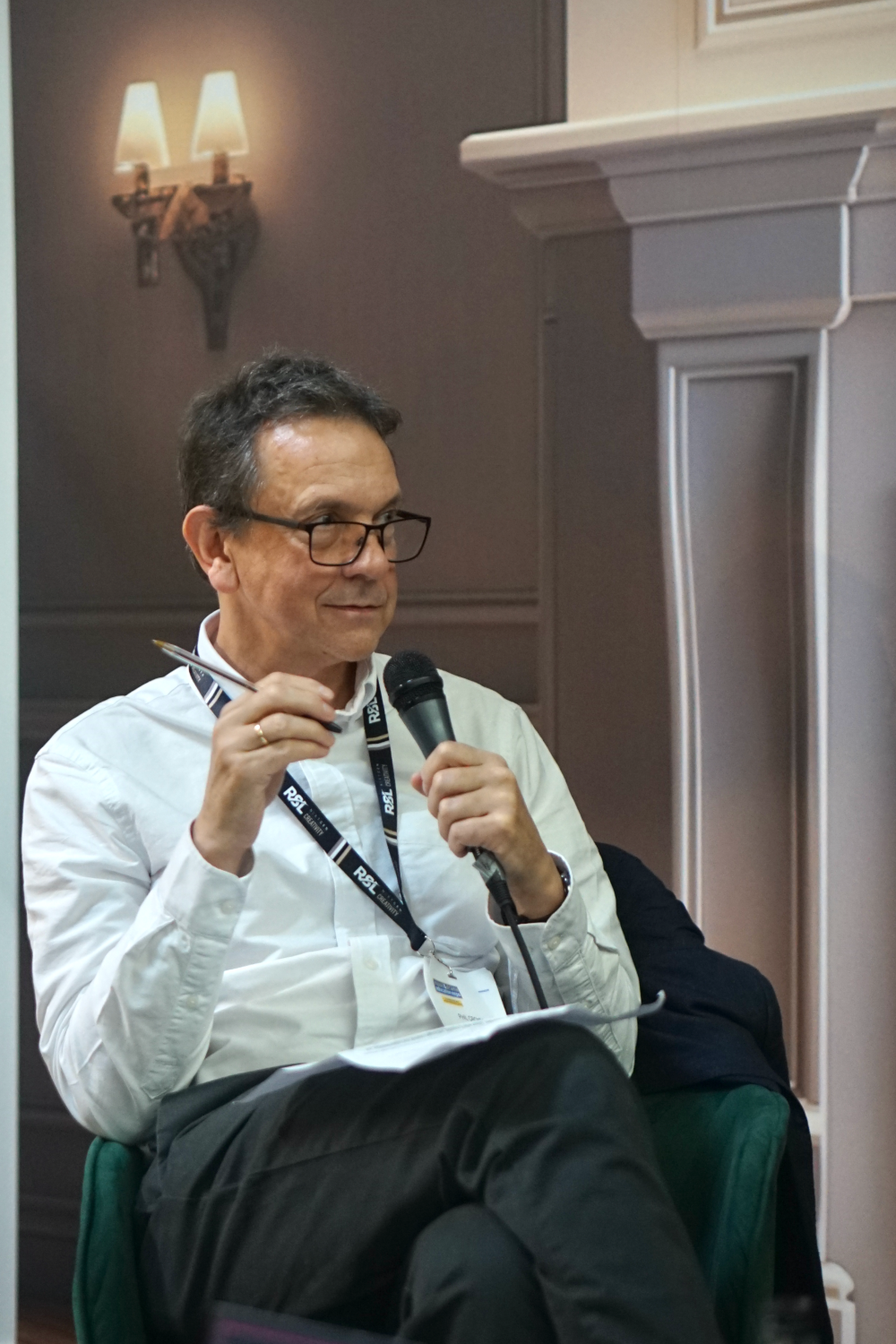
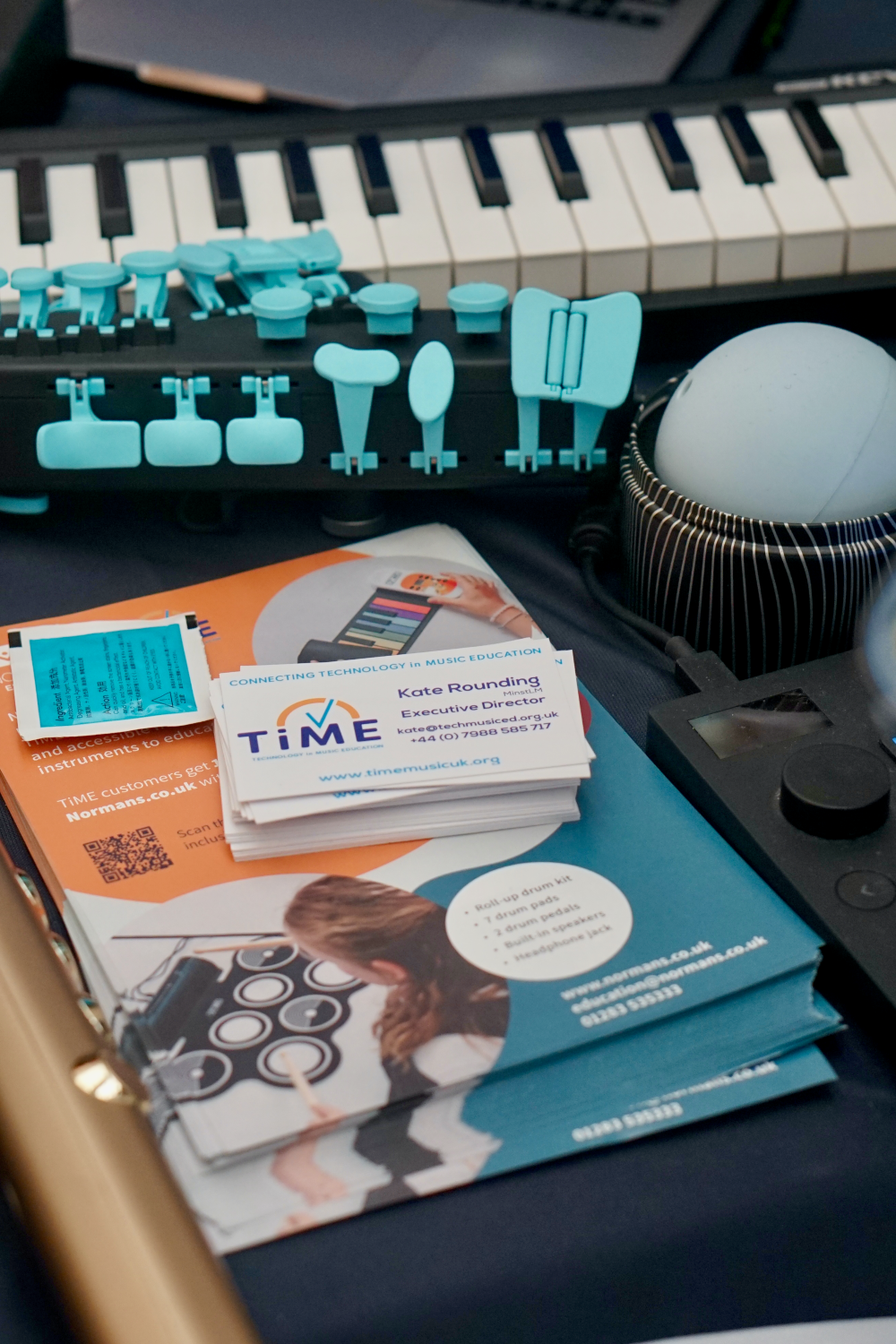
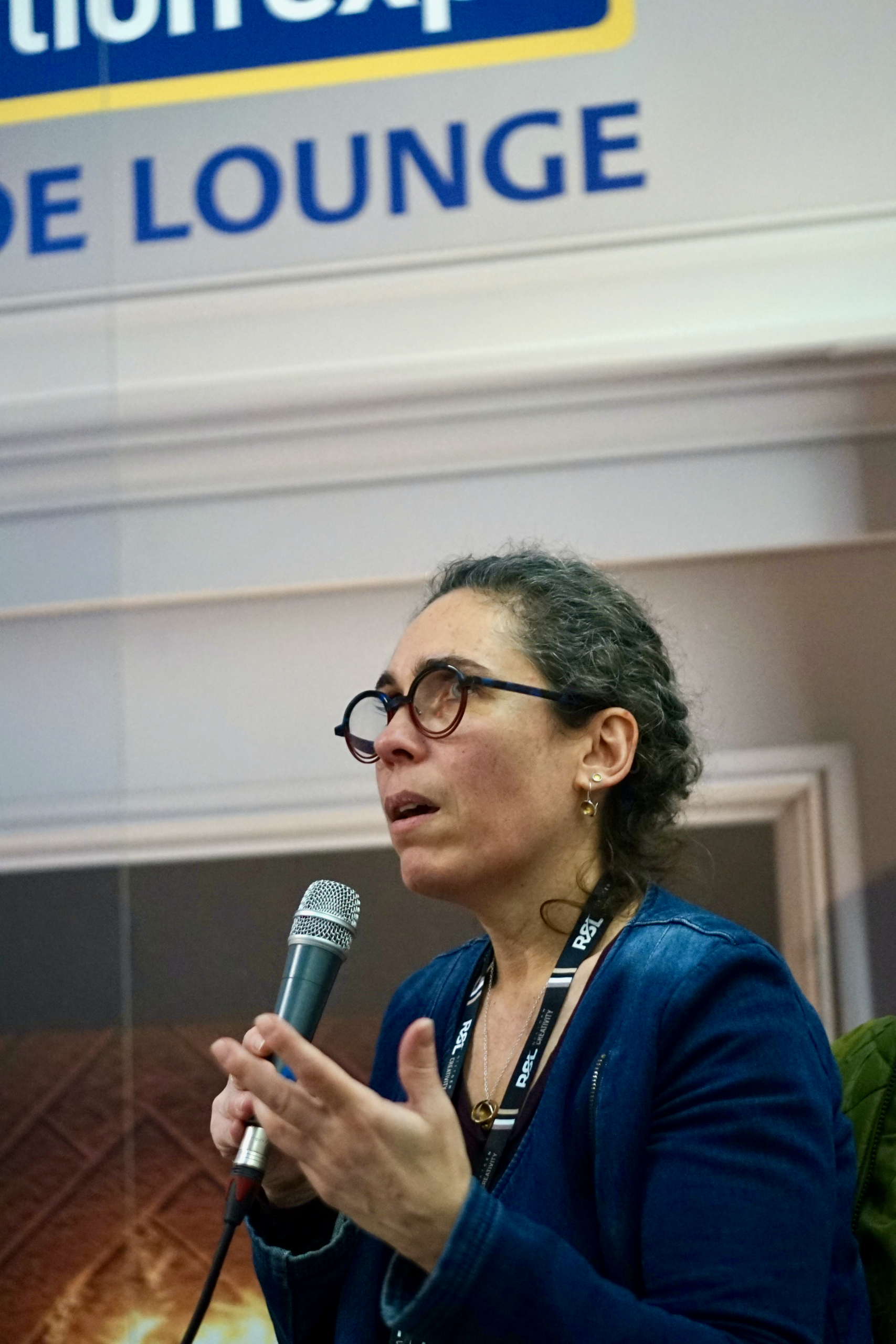
Images: Phil Croydon of Music Teacher Magazine (left), TiME’s display at MDEE 2026 (middle) and Mary-Alice Stack of Creative United (right)
Who is the Guide for?
From teachers and support workers in and out of schools to parents and individual musicians who develop new access needs, Stack expressed that the Guide is for “everyone who needs it”.
She went on to say that one of the biggest problems within this field is fragmentation – “incredible innovators around the world work in isolation. Our job is to bring their work together in one place. The guide is a starting point. It helps you discover what exists, then prompts you to take the next step—contacting a hub, a supplier, a maker, or us.”
“It’s unhelpful when a brilliant adaptive instrument is developed with public support, but retailers don’t know it exists,” Stack said. Research has shown that a large proportion of music retailers are unaware of adapted products, and many families are similarly unaware of their local music hub.
Creative United occupies a unique role: positioned between the publicly funded music education sector and the commercial music retail world. “We bridge that gap,” Stack explained, “knowledge must flow across the whole ecosystem—teachers, hubs, SENCOs, retailers, makers and manufacturers. There’s still a lot to do, and progress isn’t always smooth, but we’re committed.
The guide even includes prototypes”, Croydon added, “things in development that need uptake to survive”.
“Yes”, replied Stack, “the Artiphon, for example, appeared prominently in the 2020 guide, but the company has since gone out of business. Innovation requires support, awareness and customers. Some products receive grants to get started, but long‑term survival depends on the market. Diversity in music‑making tools can only continue if people buy, use and invest in them”.
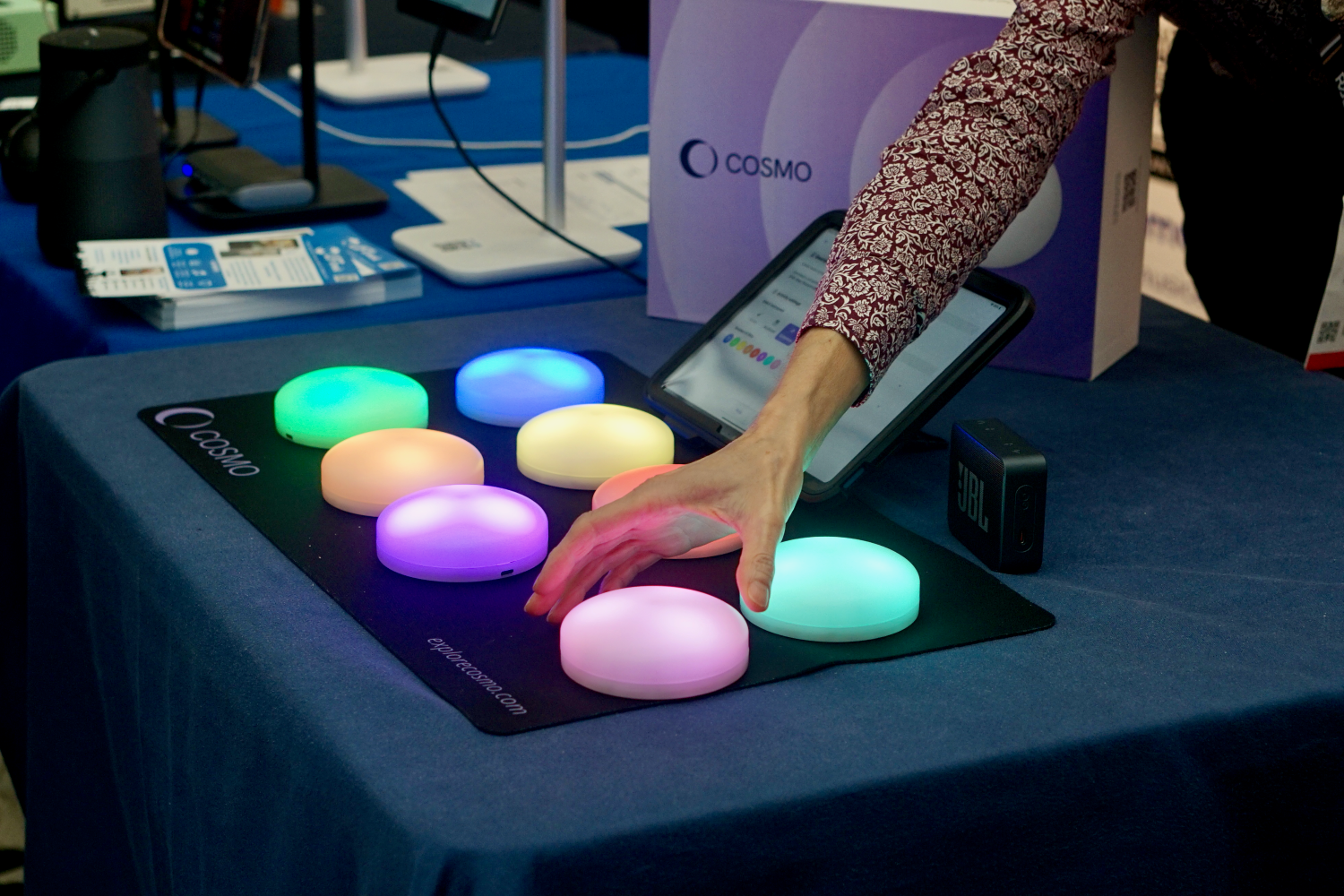
Image: Cosmo Learning System
Teacher Confidence and Creativity
“For teachers wanting to follow this up on this, what advice would you give when making a case to senior leadership, especially around funding?” Croydon asked, to which Stack offered clear guidance:
- Understanding who requires support, and of what kind, is foundational.
- Use the guide to identify possible solutions.
- Test equipment before buying. Not every tool suits every learner.
- Convert inclusion policies into concrete action plans. “A policy statement isn’t enough,” Stack said. “You need to know what your first step will be when a child presents with a need.”
- Encourage teacher creativity. Confidence, permission and support from senior leadership are essential.
“Inclusion takes courage,” she concluded. “But once you begin, you realise the possibilities are far greater than the challenges.”
Stack highlighted the experience of the Nottingham Music Hub, where Creative United ran a two‑year pilot project. Initially, teachers did not believe they had disabled learners in their cohort – an assumption quickly disproven. Through collaborative exploration and training, previously “invisible” learners were identified and supported, often with simple but transformative adaptations.
Similar work in Leicestershire, Bristol and other hubs has shown the power of shared knowledge and cross‑hub resource pooling. The long‑term hope is that hubs will collaborate more formally through inter‑hub lending and shared equipment banks.
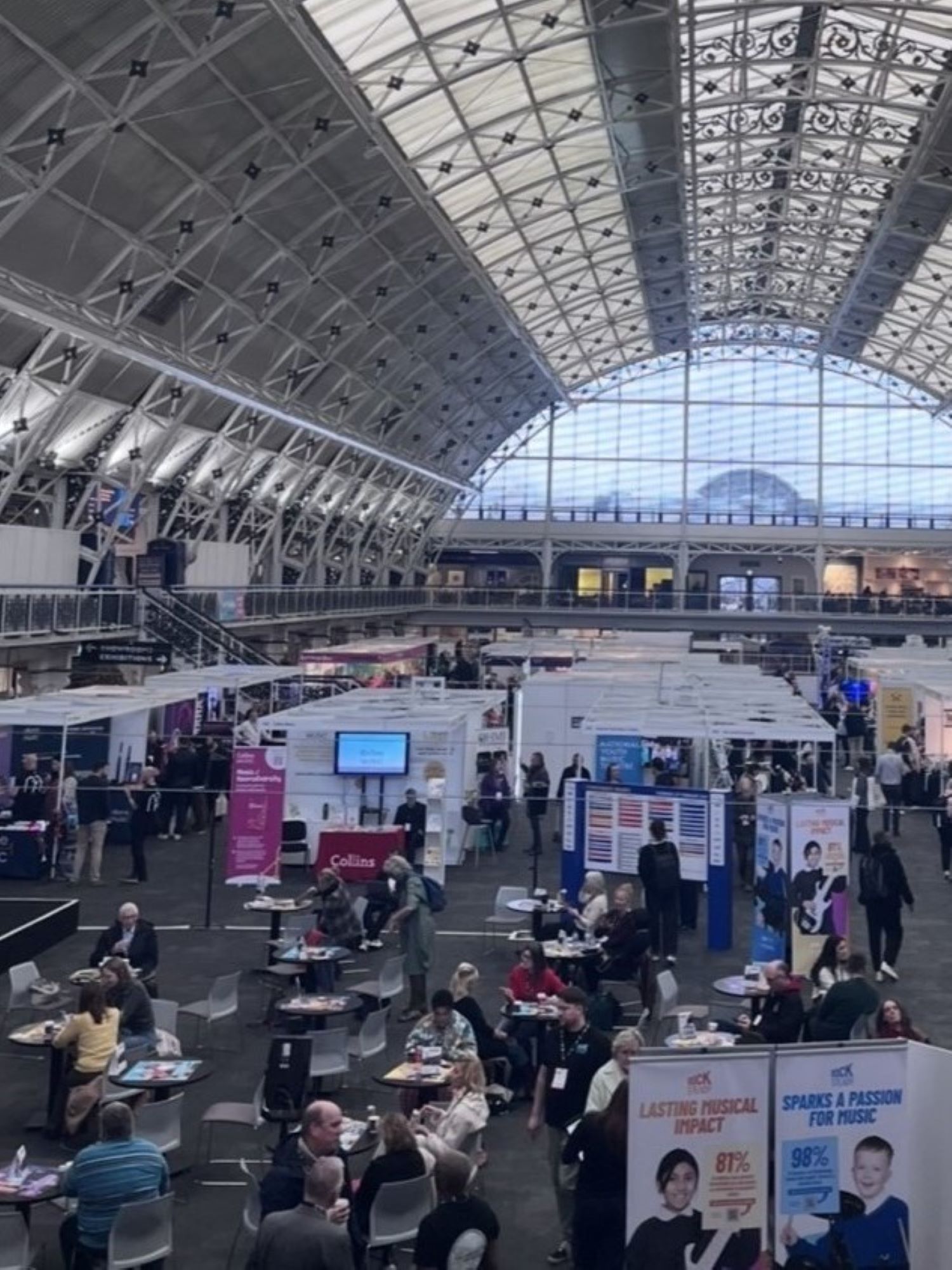
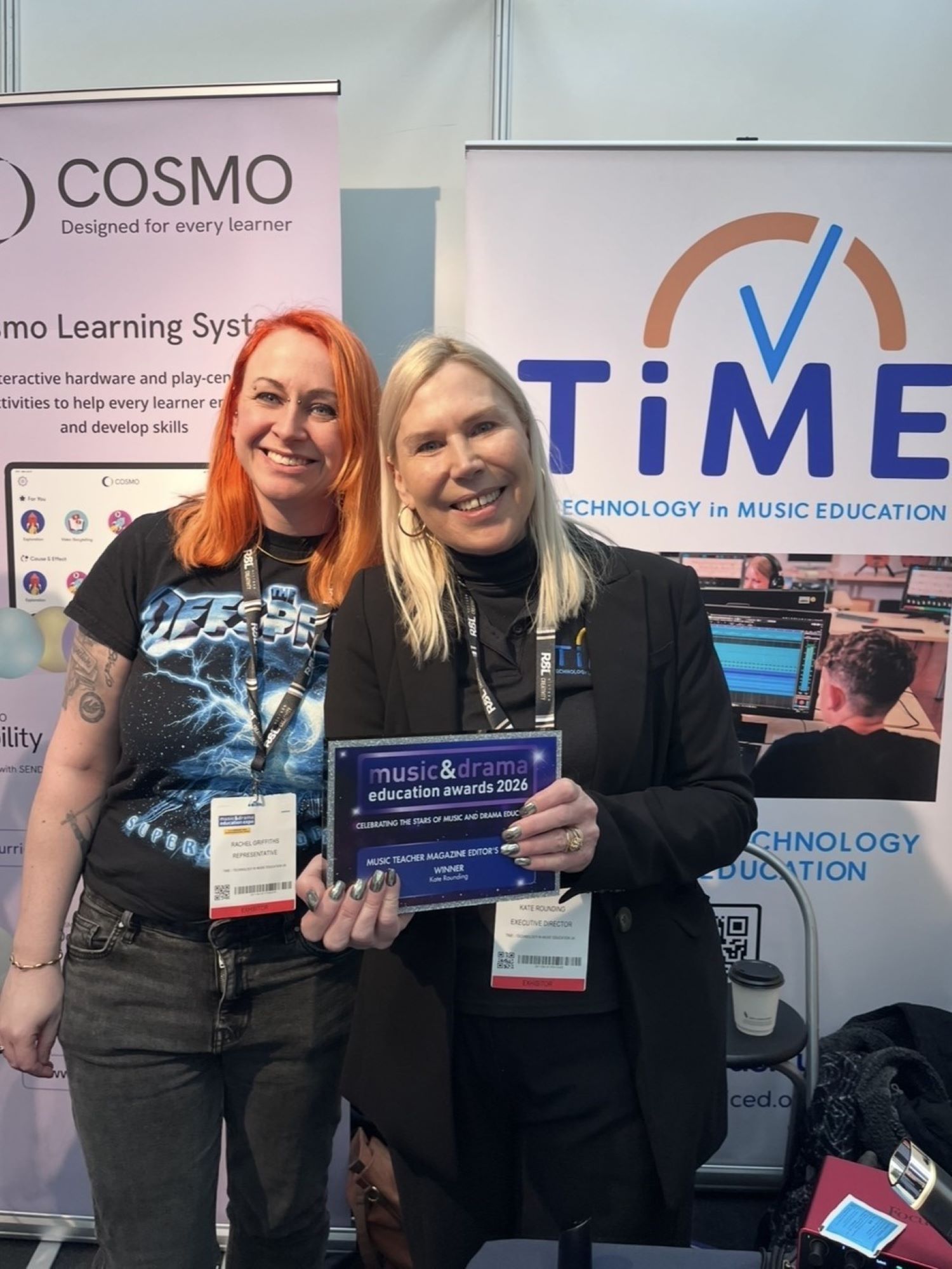
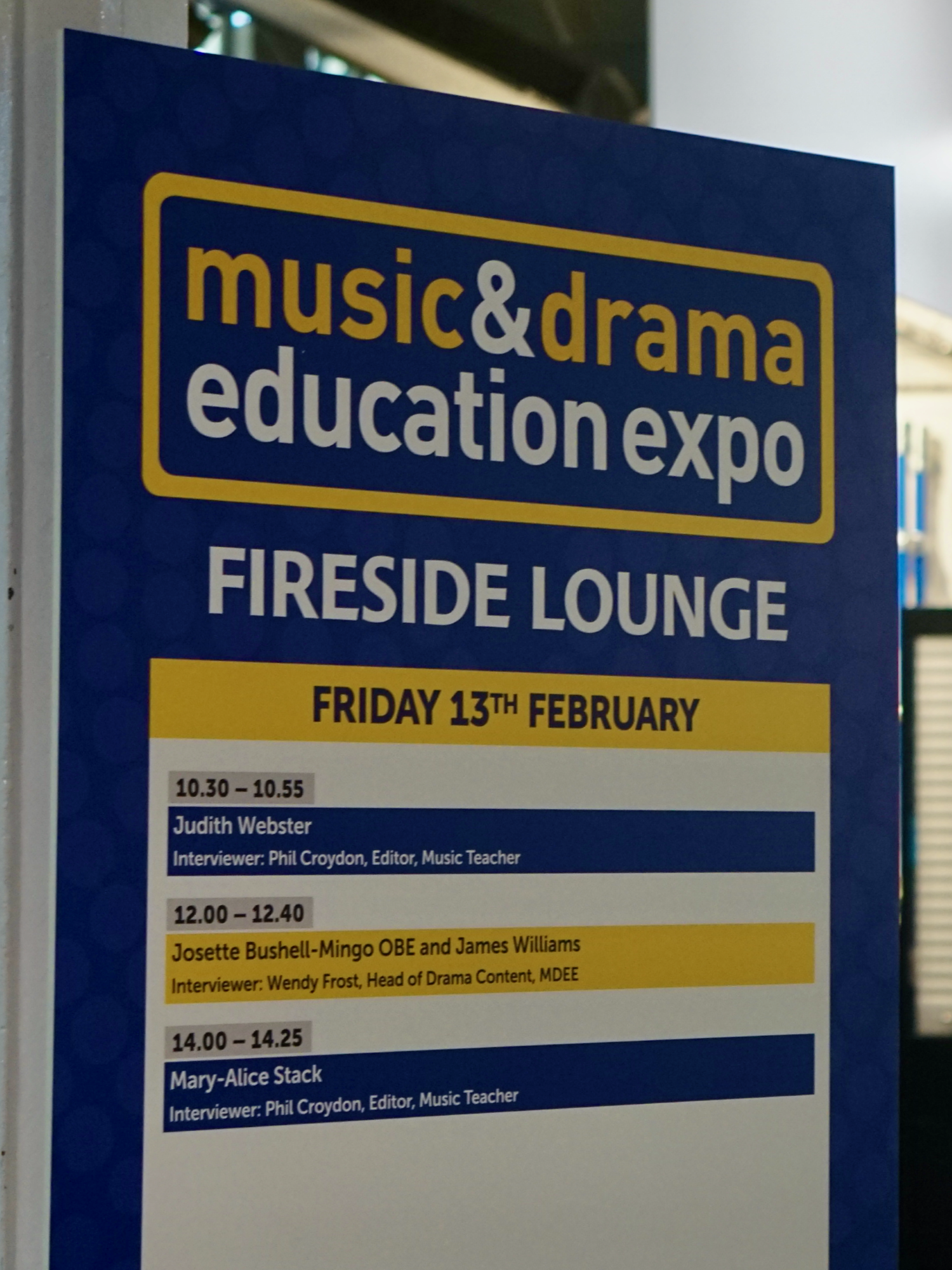
Images: MDEE 2026 (left), Kate Rounding – Executive Director of TiME and winner of Music Teacher magazine Editor’s Award – pictured with Rachel Griffiths (middle), and MDEE 2026 Fireside Lounge Friday Talks Programme (right)
Looking to the Future
With rapidly evolving technology, growing international interest and an increasingly connected community of innovators, Stack is optimistic about the direction of travel. The UK is recognised globally as a leader in inclusive instrument design, and Creative United aims to support future international collaboration, potentially even transforming the guide into a dynamic, global resource.
“Knowledge sharing is transformative,” she said. “If we continue innovating collaboratively, the next century of music‑making will look radically more inclusive – and far more exciting.”
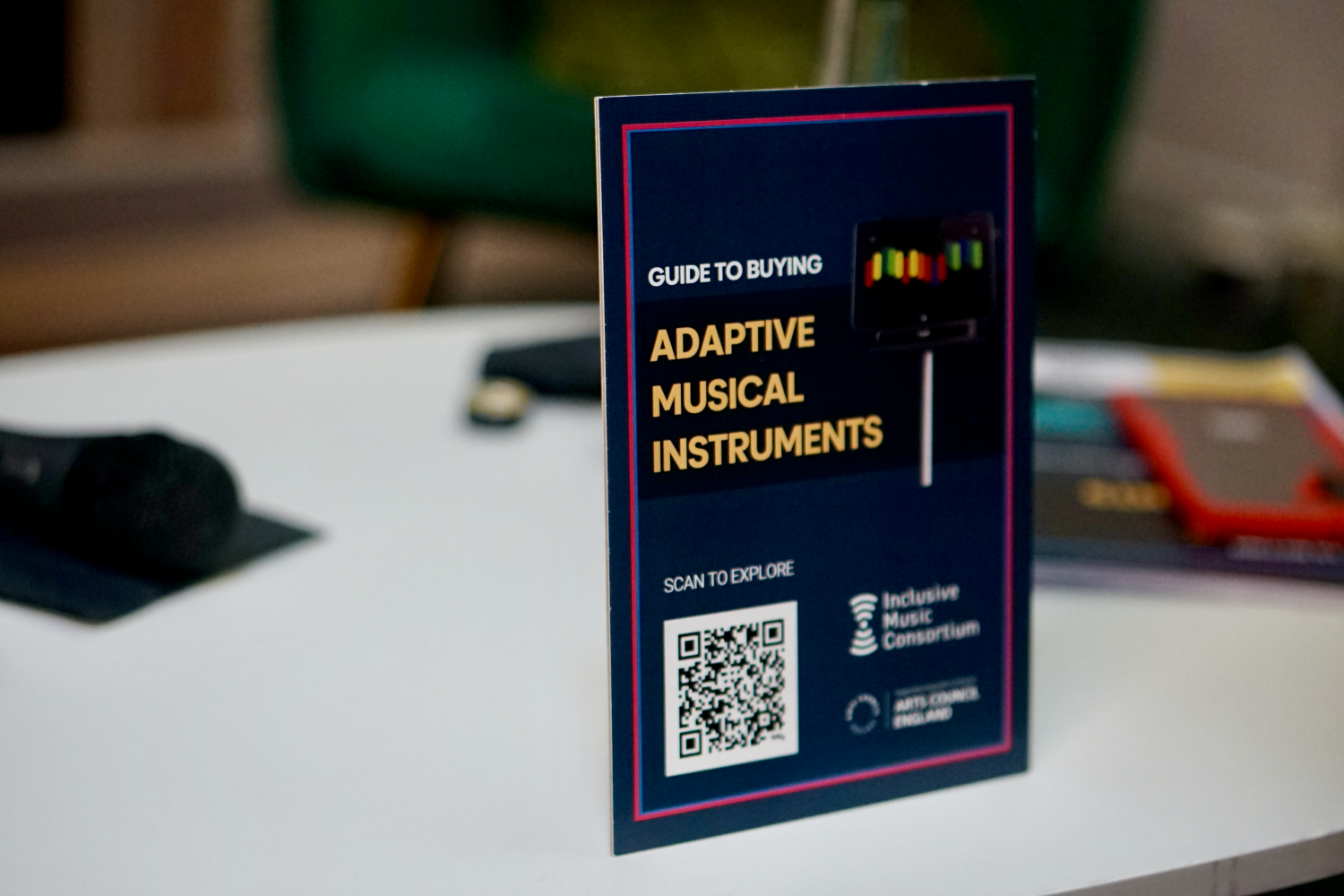
Accessing the Guide
The Guide to Buying Adaptive Musical Instruments is free to download from the Take it away website.
> Click HERE to download <
The website also features an interactive map of over 100 music shops offering a range of instruments, equipment, technology and tuition, available to buy with an interest-free loan, including two retailers specialising in adaptive instruments.