

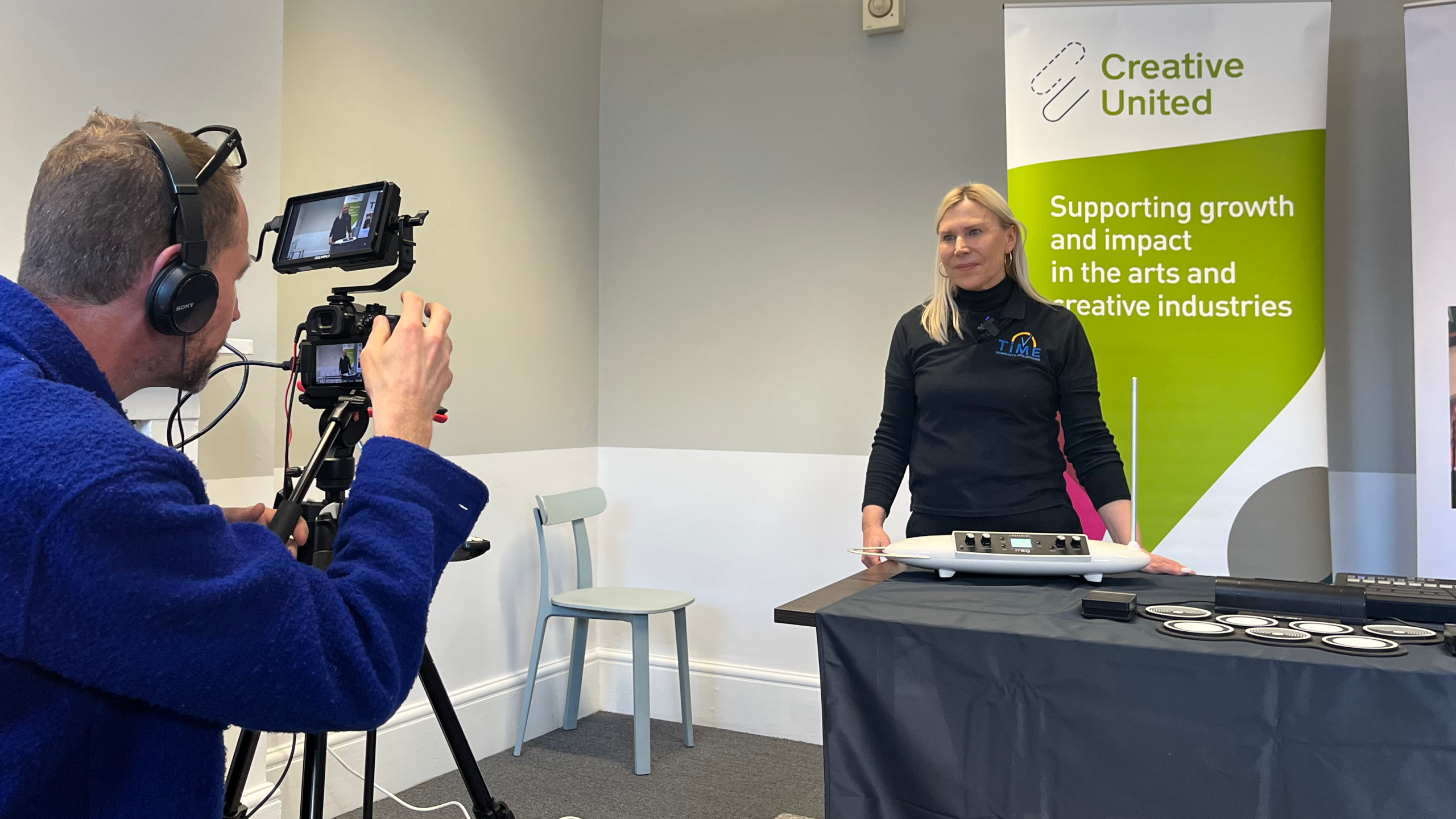
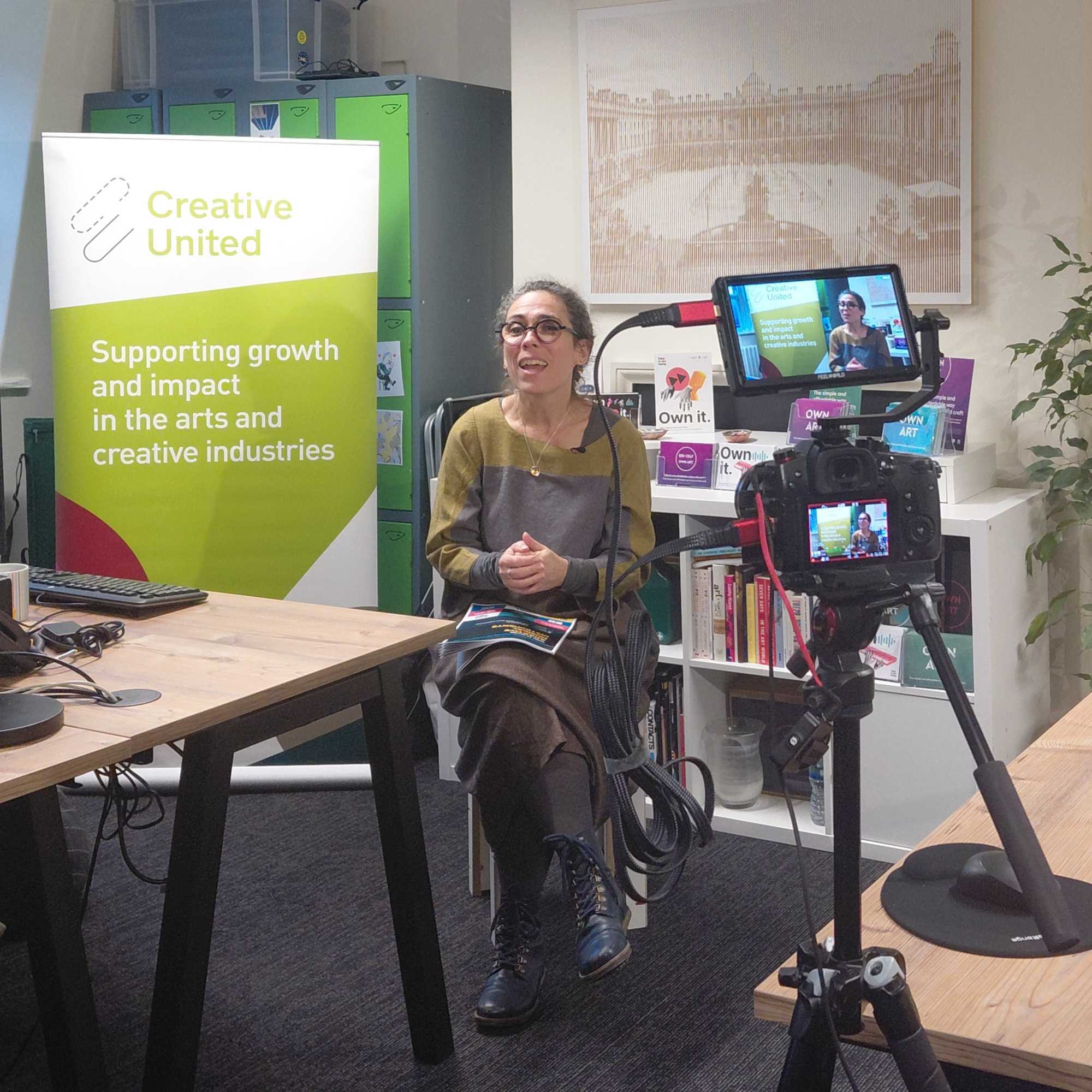
As part of our commitment to supporting creative livelihoods for all, we were delighted to welcome the specialist media channel SEND Network to our Somerset House office.
Creative United Chief Executive Mary-Alice Stack spoke with the crew about how teaching staff can use the newly published Guide to Buying Adaptive Musical Instruments to help children with SEND unlock and develop their musical talents.
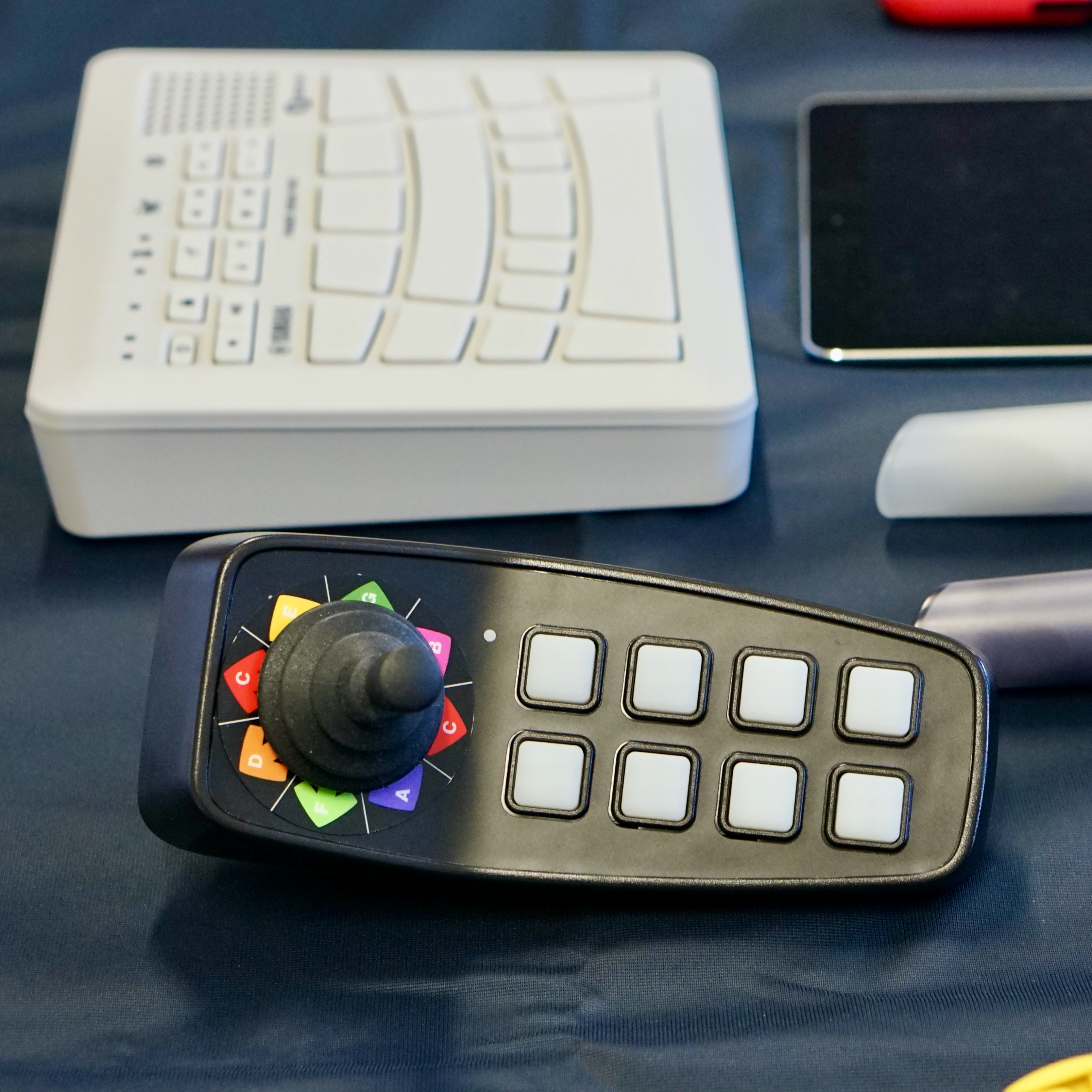
Experts Kate Rounding and Richard Llewellyn from Technology in Music Education (TiME), contributors to the guide and members of the Inclusive Music Consortium, brought the guide to life with a hands-on demonstration of innovative instruments at their ‘table of tech’, showcasing the exciting possibilities of adaptive music technology.
The in-depth on-camera interviews form a two-part series to help raise awareness of the possibilities for musical inclusion amongst Special Educational Needs Coordinators in the UK.
The Guide to Buying Adaptive Musical Instruments is a practical introduction to the accessible instruments, assistive technologies and adaptive equipment available to support disabled musicians of all ages. Developed by the Inclusive Music Consortium and commissioned by Creative United, it’s the only resource of its kind in the UK.
During the interview with SEND Network, Mary-Alice Stack highlighted the importance of the Guide, noting:
For the last five years, in partnership with the Inclusive Music Consortium, we’ve been trying to think about ways in which we can evolve, build on, and expand that original document to be as useful as possible to the widest number of people. Whether they’re children learning an instrument for the first time, or adult learners or professional musicians who may have experienced an injury or illness that may have changed the way in which they’re playing and therefore require an adapted instrument or piece of assistive equipment.”
“It’s not an exhaustive guide,” Mary-Alice adds, “but if you’re looking to find out what might be out there” and “if you don’t know where to start at all, it can be very difficult.” However, “with a guide like this, at least you’ve got an entry point.” She continues, “Our job as Creative United is to bring together the information and the potential solutions that might help you with your creative practice […] we’re really conscious of the fact that there isn’t one pathway and the barriers that people experience can be also quite diverse depending on their circumstances.”
“We always say that there’s no one-size-fits-all. There’s no one young person the same,” Kate shares in TiME’s interview. She also emphasises the importance of awareness, noting:
I think what’s really important is that there is awareness. This is why the guide is important. It’s raising awareness of the possibilities.”
Kate adds, “We’re very happy when people contact us if they have questions. If we don’t know, we’re connected with lots of organisations who may well have that answer for them.”
Reflecting on the process behind the guide, Kate shared, “the background research really started with the original guide, and then bringing in more of the new innovations in music tech.” With ongoing innovations in music and technology, TiME Chief Executive Officer Richard shared insights into the wide range of solutions now available. “The issue is people knowing what might be available for a particular student with a particular disability,” he said, underscoring the importance of a bespoke, individualised approach.
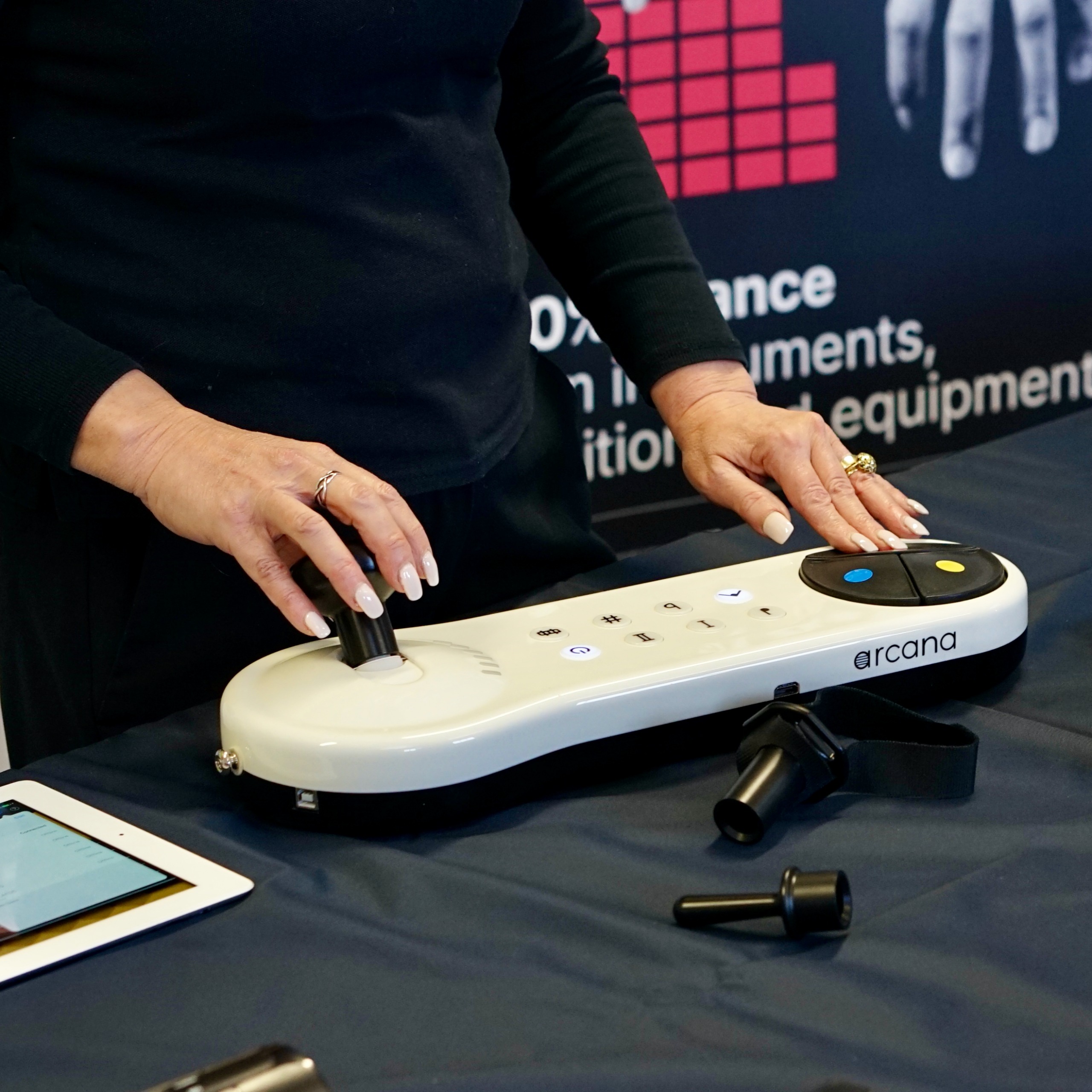
For instance, while a conventional drum kit may present challenges for a wheelchair user, the 3rd Avenue Digital Roll-Up Drum Kit can provide an accessible alternative. “There’s been quite a few instruments coming out recently that look at gesture control,” Richard adds. The Moog Theremini is another example of a reimagined classic that enables intuitive music-making for people of all ages and physical abilities.
Kate Rounding with the Moog Theremini
Richard also highlighted the Soundbeam, a multi-award-winning, touch-free assistive music technology that transforms physical movement into sound and music. He also discussed emerging technologies designed to expand accessibility beyond music, including the world’s first hands-free touchpad, the MouthPad^, which is a smart mouthwear device that enables users to control phones, computers, and tablets hands-free by resting on the roof of the mouth, developed by Augmental. Insights like these are precisely the type of expertise the Inclusive Music Consortium brings to the sector.
Considering student access in the classroom, Mary-Alice shared,
If it’s a wind instrument, do they have breath control? Have they got the ability to get the sound out of the instrument in the way that their peers are expected to? Or is it to do with muscle strength or coordination or a requirement to support the weight of the instrument? So again, there’s lots in this guide that is actually just to do with kind of quite simple, practical support. it might be a stand that can take the weight of a trumpet so that actually the child can concentrate on the blowing technique and not worry about the weight of the instrument.”
Practical adaptations can have a transformative impact on student engagement. The pTrumpet, for example, features fully plastic valves and adjustable tuning slides, weighing less than half of a traditional brass trumpet, making it far easier to hold and play. Similarly, the iTrump app mirrors a traditional trumpet’s full note range, enabling users on a phone or iPad to blend notes, add vibrato, adjust pitch, and modify the bell to control volume. Together, these innovations provide flexible, accessible pathways for students to explore music, removing physical barriers and supporting creative expression for all.
Music Hubs across the UK also provide a valuable network of regional partnerships, bringing together schools, charities, and organisations to deliver high-quality, accessible music education for young people within a local area. The Arts Council’s Music Hub programme funds a network of 43 Hub partnerships which cover every area of England. Referring to TiME’s table of technology, Kate adds,
A lot of the hubs are looking at buying instruments such as these to put into their libraries of instruments for accessible use by disabled musicians. Lancashire Music Education Hub have developed the Accessible Musical Instrument Library.”
Lancashire Music Hub also offers a range of free resources on their website, including lesson plans designed to support teachers in making music education more inclusive.
Accessible instruments can offer far more than traditional music skills, supporting communication, play, and even therapeutic outcomes. Kate introduces the Cosmo Dot, a device designed not only as a musical instrument but also as a tool for interaction and play.
Richard highlights the therapeutic potential of digital instruments, citing the new LIFT app, which mirrors users’ movements on-screen while music responds instantly to their gestures. “So this whole sort of physiotherapy element is really important too,” he concludes, demonstrating how accessible music technology can support holistic learning and wellbeing. On the topic of overcoming barriers and ensuring music is accessible to all, Mary-Alice emphasises:
“It shouldn’t be that the answer is no. The answer should be yes, maybe. Let’s try together to find a solution. So sharing knowledge is the most important bit.” Her words underline the importance of collaboration, resource-sharing, and persistence in making inclusive music opportunities a reality.
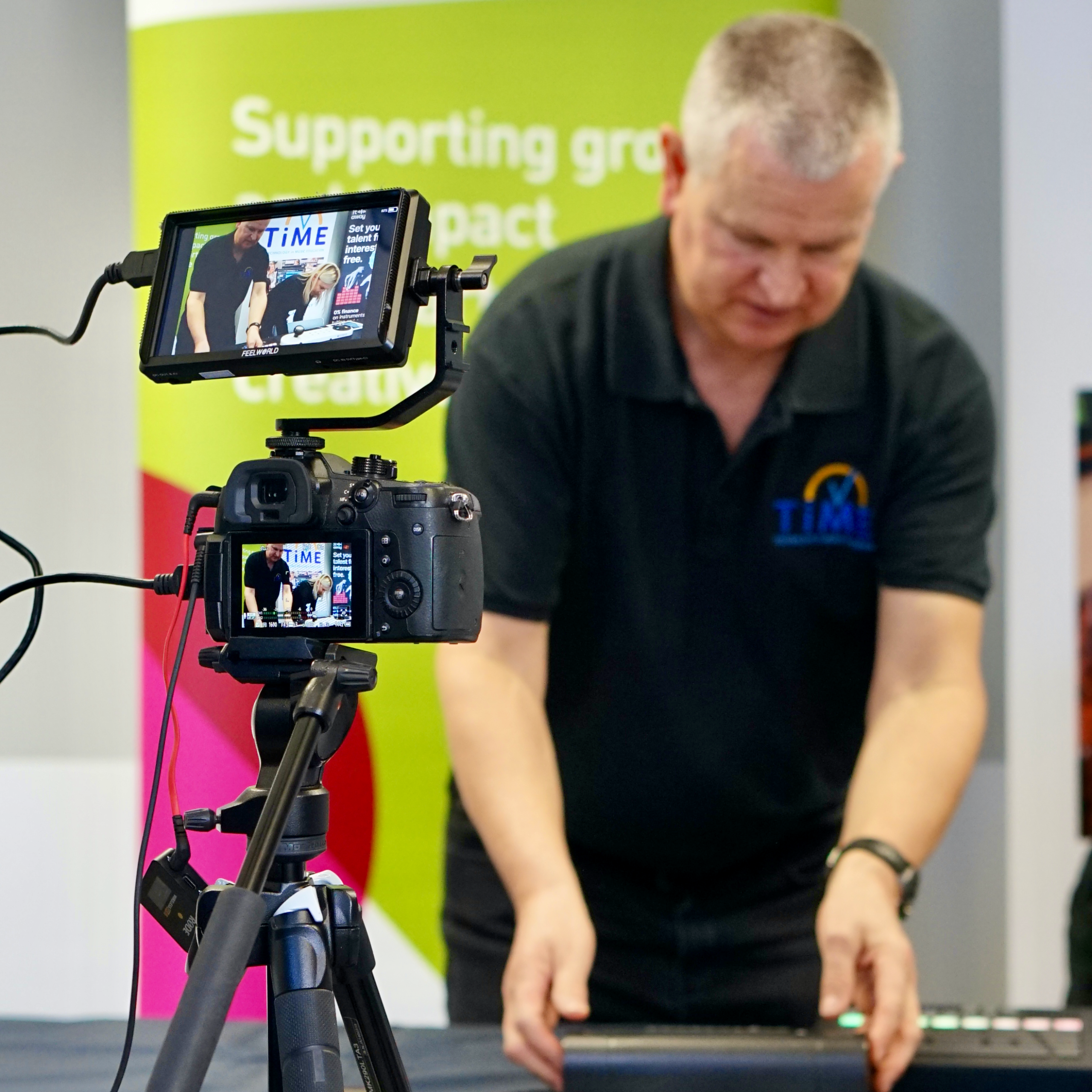
Watch the SEND Network’s interview with Mary-Alice Stack.
Watch the SEND Network’s interview with TiME.
Explore the instruments and resources featured in this article by following the links below.
- TiME – Technology in Music Education
- Inclusive Music Consortium
- The SEND Network
- MOOG Theremini
- Roll-up drum kit
- Soundbeam
- Augmental MouthPad^
- The pTrumpet
- iTrump app. Click here for video demonstration.
- CPD Session Offer: Technology in Music Education – Table of Tech
- The Lancashire Accessible Instrument and Technology Library
- Cosmo Dot
- LIFT app
Accessing the Guide
The Guide to Buying Adaptive Musical Instruments is free to download from the Take it away website.
> Click HERE to download <
The website also features an interactive map of over 100 music shops offering a range of instruments, equipment, technology and tuition, available to buy with an interest-free loan, including two retailers specialising in adaptive instruments.